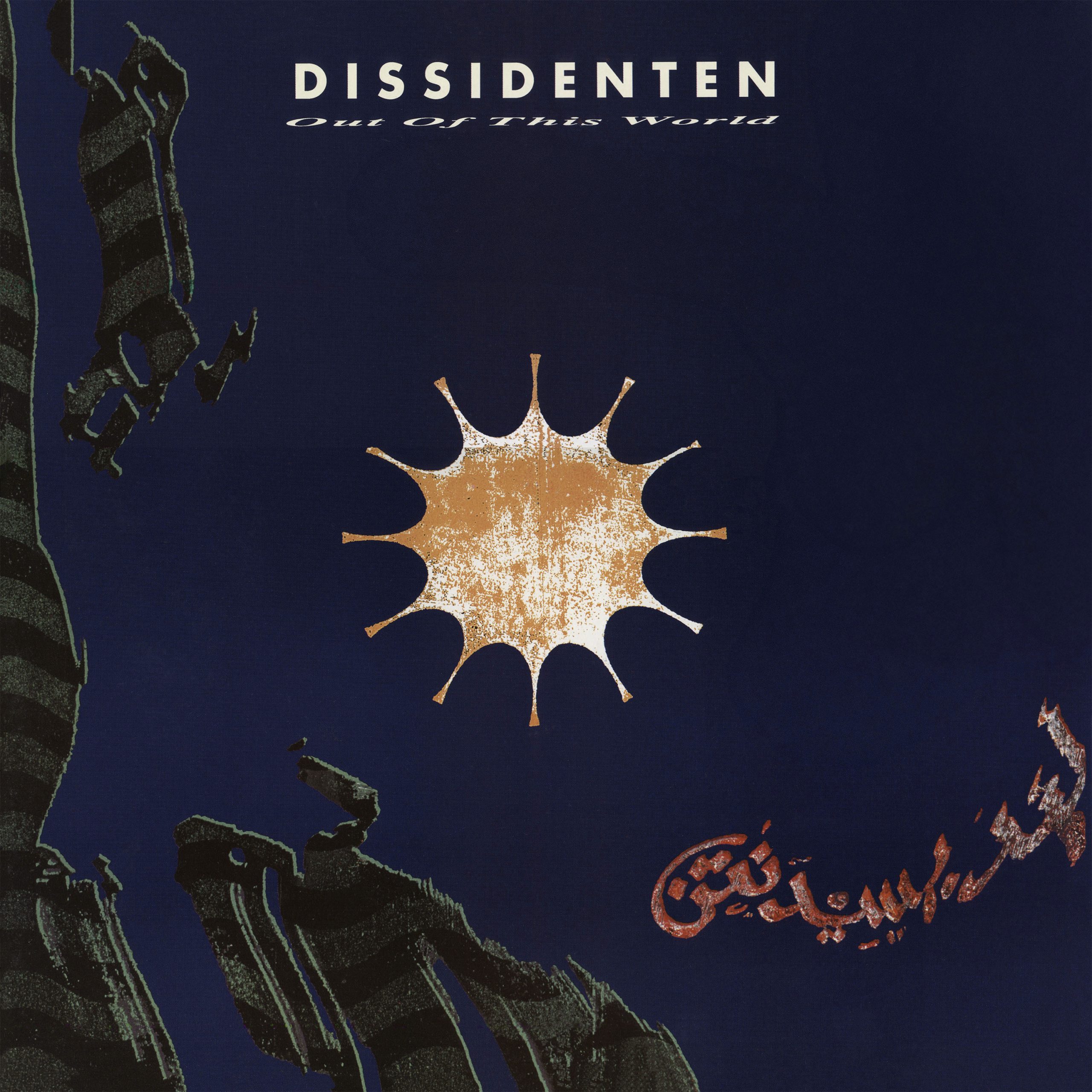
DISSIDENTEN – Out Of This World
Releases on: Mar 3, 2026 –
“This album recounts our experiences and encounters with people from a different culture.”
“Out Of This World is both a part and an expression of a cultural development in Europe that we have been involved in from the very beginning. Through the cosmopolitan opening of our previously insular cultures, entirely unfamiliar and novel forms are emerging in metropolises like Berlin, Paris, or Madrid – forms that find their expression particularly in music.”
“Through the meeting of different cultures, the Old World is experiencing an exchange of ideas whose long-term impact is comparable to the influence of former Black slaves on American culture.”
— DISSIDENTEN
The Story
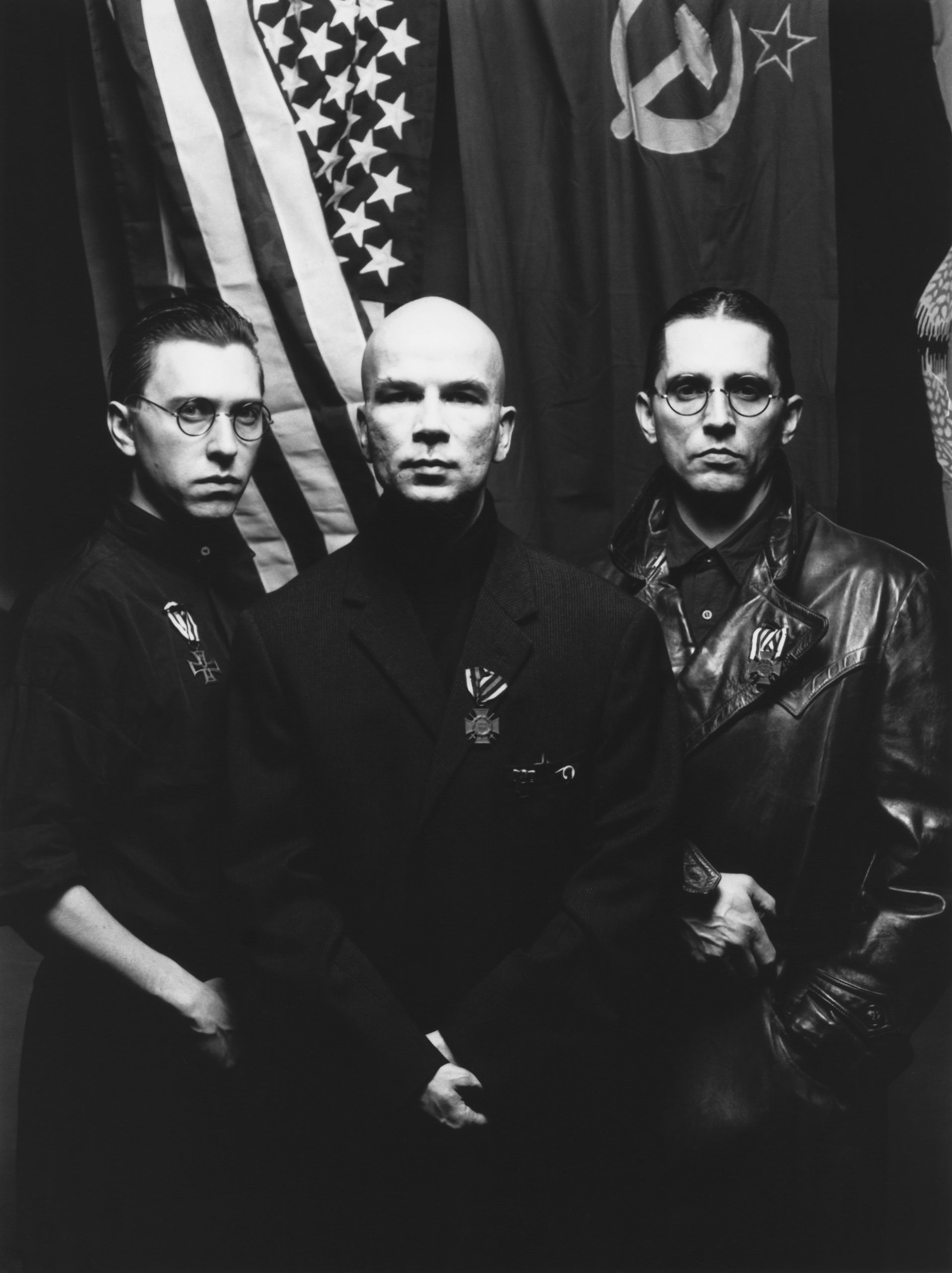
Untouched by prevailing Anglo-American pop trends and the frantic pace of the zeitgeist, Uve Müllrich, Marlon Klein, and Friedo Josch spent 1989 in North Africa working with friends old and new on the recordings for the album Out Of This World.
Because customs officials -by the very nature of their profession- take a dim view of “borderless” music, DISSIDENTEN had to smuggle their mobile studio across the Strait of Gibraltar to Tangier under the cover of night.
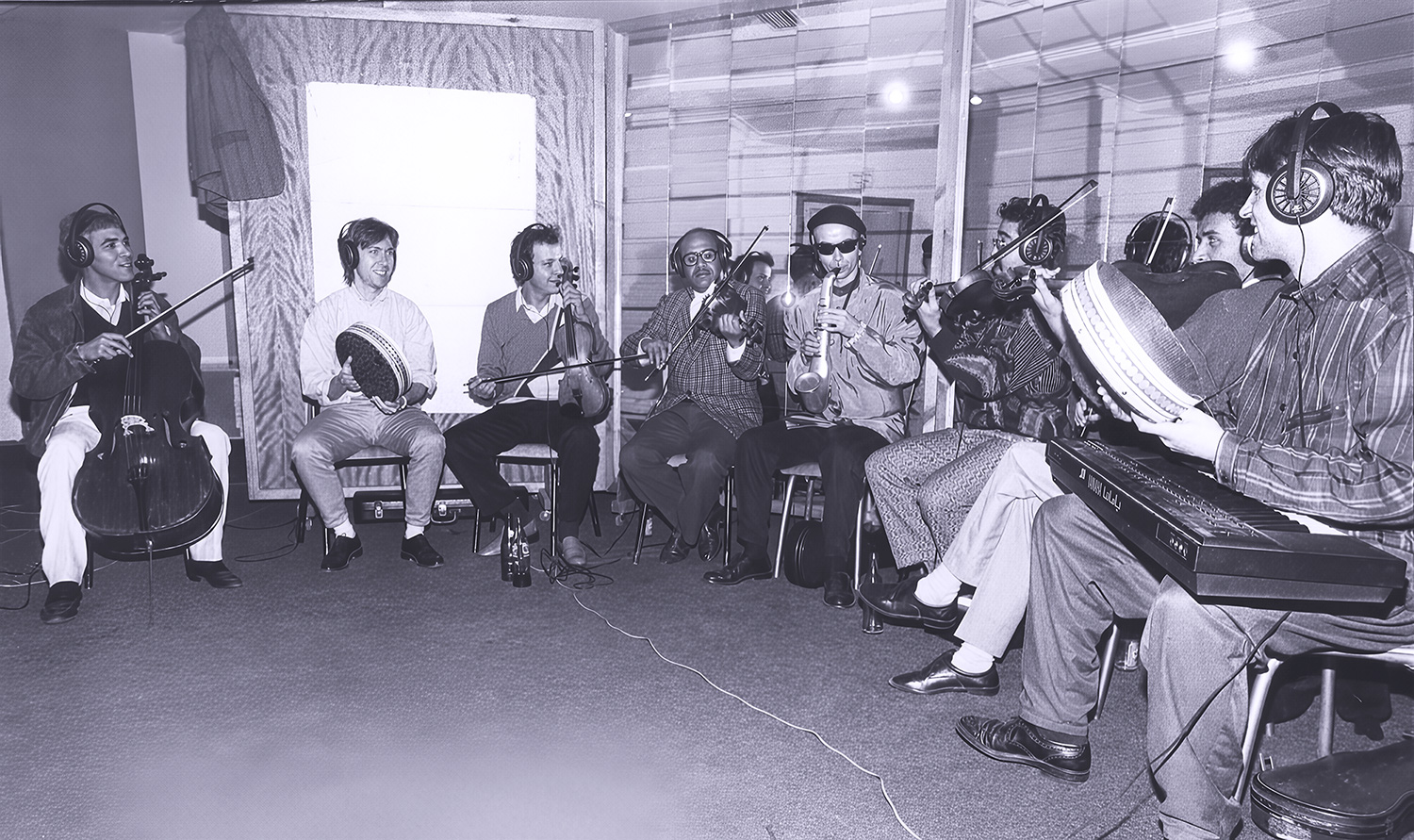
Amidst the turbulent maze of the Souk and the Kasbah, many a recording session took place under conspiratorial circumstances. Part of the album was recorded in the Sultan’s Palace in Tangier with stars of modern Arabic pop music, including singer Mahmoud Saadi (founder of the legendary groups Jil Jilala and Nass El Ghiwane) and Raï pioneer Noujoum of Lem Chaheb.
Their old friend and patron, Sheikh Abdul Al Rashid, granted them access to one of the sacred institutions of the Arabic musical world: The Royal National Orchestra of Morocco.
These extraordinary virtuoso string players, along with Qanun master Abdelfatah El Ouali,
succeeded in sensitively weaving the classical Moroccan orchestral sound into the “Eurabic” sonic tapestry of Out Of This World.
The song ‘Urban Dervish’ is dedicated to Paul Bowles, an American writer and composer living in Tangier. Abdullah El Gourd, a long-time friend and advisor to the DISSIDENTEN and a gimbri player, echoes the spiritual origins of the trance cult of the Gnaoui musicians in this homage.
Most of the lyrics on the album were written by Cherif Lamrani, one of the most important poets in contemporary North African music. They tell stories of everyday life, stories of longing. ‘Don’t give me love, money or power, give me truth!’ These are courageous, unusually candid lyrics about the dreams of Arab youth, their struggles for freedom, and the search for the cultural roots of their shared Mediterranean tradition.
The DISSIDENTEN, who came as researchers, became ambassadors. While cassettes of the sessions are already highly sought after in the bazaars of the Middle East, the master tape finds its way via Madrid to Hamburg, where the rough diamonds are polished. With a sensitivity that can only come from many years of experience and a natural understanding of other cultures, the DISSIDENTEN develop state-of-the-art Eurabian dance music with an unusual sound and earth-shattering groove on Out Of This World. At the same time, they provide definitive proof that the world is a global village on a black round disc, where boundless music connects people without cultures losing their independence.
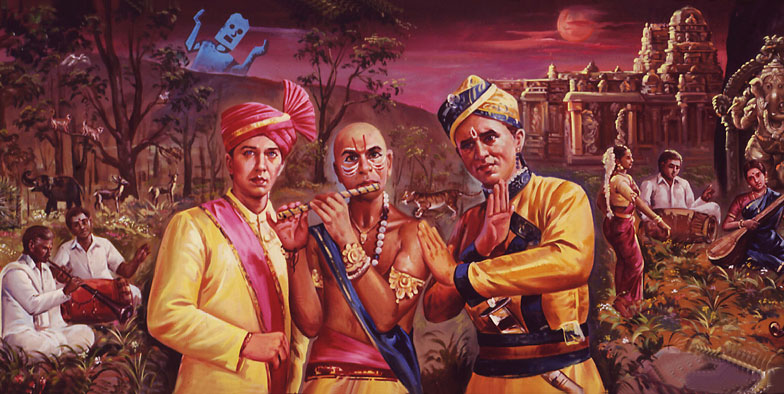
And so a powerful storm of sounds arose and swept across the world.
Those that were caught in its path got into action and began to dance. Thousands danced in Morocco and Algeria. Hundreds of thousands danced in Spain, Greece and Italy. They even danced in Germany.
Spring broke out in the middle of the Canadian winter when DISSIDENTEN’s new single danced to the top of the independent charts. Thanks to their three-track 12″ Casablanca Humphrey Bogart made new flight reservations.
They produced their third album Live At The Pyramids with Hamid Baroudi, a wild Jagger of the desert, and El Houssaine Kili, a crazy Hendrix dervish. The Pyramids turned into discos.Allah was merciful and gave them Cleopatra as a belly dancer. The path of fame led further and further to the top and in 1987 they caught sight of the skyline of Manhattan.
The concert in New York was triumphant. The guests, among them the busy David Byrne and the holy Madonna, danced with joy. The critics tumbled over themselves with hymns of praise and thus the world’s greatest media giant Warner Brothers arrived on the scene. Record-Sheikh Seymour Stein followed DISSIDENTEN into the desert and the contract was signed in a small tent. And so they flew once again on their musical carpet through history and cultures of the Near East, presenting them new rhythms for all to see and hear.
Certain that now the whole world would dance, they returned to their home, Berlin – and were once again ahead of their time. While hundreds of thousands deserted to the West,
DISSIDENTEN’s caravan moved to the East, to Potsdam/Babelsberg in East Germany and presented the world with a new premiere. Under their direction, the first videoclip of a Western band was produced on Eastern soil in front of an Oriental back ground at the renowned Defa Studios.
And thus they finally provided proof that the world is a black round disc. And if DISSIDENTEN are still alive, the world is still turning today.
Thomas Boehm (Musikexpress, Stern) 1990
DISSIDENTEN – Out Of This World
DISSIDENTEN are no longer in exile. In 1989, after ten years spent on a musical discovery of the globe, they established their main base in Berlin again. And their fourth album no longer reaches the people via the indie channel but on the Sire label. Here bassist and guitarist Uve Mullrich, keyboarder and drummer Marlon Klein, flute player Friedo Josch and their many collaborators are in best company with the holy Madonna and David “Baby” Byrne. Byrne was namely the one, who as an admirer of DISSIDENTEN, vehemently recommended them to Sire Sheik Seymour Stein. It was certainly right that he did so, as the new album shows. For here come together truely only the best elements of the various cultures. The rhythm duo Mullrich/Klein drive the swinging caravans forwards with a hypnotic dance beat. Josch spices it up with tempting flute passages. Several Arabian singers exchange or share places at the microphone and this results in new sound shadings again and again and exciting twists.
Moreover DISSIDENTEN have at least three additional aces in their hands: first, the Royal National Orchestra of Morocco, whose excellent string section with its unusual half-a- semitone sounds sets excellent contrasts to the pulsing electronic beat, to the sparingly portioned-out funk guitar or the spacey-sounding keyboards.
Second, the irresistable melodies of the song that despite their oriental character invite one to sing and whistle along. Finally, third, Marlon Klein provided a production that doesn’t even hurt spoiled ears. “This is not America” is the title of the last song – how true, and thanks heavens. The Nineties are still very, very young, but it doesn’t seem too risky to state that DISSIDENTEN have succeeded with the first great album of the decade.
Manfred Gillig (1990)
DISSIDENTEN: “A TRUE TALE OF ARABIAN NIGHTS”
It may be hard to believe, but the most astounding tale out of Arabian Nights is absolutely true.
Once upon a time, about 190 decades after the legendary Three Wise Men left on their pilgrimage, three white men from the West, Friedo Josch, Marlon Klein and Uve Mullrich, took off into the distance, for they sought new worlds.
Even as famed German underground band “Embryo” they had al ready travelled to many continents, listened to strange sounds and made music with orchestras from India and Zimbabwe, sang with Eskimos and danced their soles off with the Black Feet Indians.
Now they left their home Berlin as dissidents and took the first step on the path to fame – which led straight into the Moroccan desert. Experienced adventurers, they not only found their way, but also found a grain of truth in the guise of an acoustic mirage. Far beyond the Camel Tour path they drank at the wells of musical oases and searched for Oriental treasures in the alleyways and bazaars of the ancient cities.
Guided by the light of Aladdin’s Lamp, they met Sheikh Abdul Al Rashid in Tangier – one of the most influential powers on the Arabian music scene. He invited them to his Palace, where he had already been host to Jack Kerouac, William Burroughs, Allan Ginsberg, Paul Bowles, Timothy Leary, Barbara Hutton and the Rolling Stones.
Instead of languishing in the Harem, they encouraged the local musicians of the cult group Lem Chaheb to join them in serveral sessions. Thus the first musical “con-fusion” took place between Orient and Occident.
The heart of ethnobeat started to tick long before the music industry had invented “World Music”.
Friedo Josch taught the Berbers to play the berlin flute, Marlon Klein showed them the pulse of modern times on the drums and Uve Miillrich strung new strings on his bass. The Moroccans reciprocated with traditional melodies and songs. The “Mo-rock-on” sound of DISSIDENTEN brought the whole desert to life.
Sahara Elektrik was then the name of the album that was sent around the world on their own Exil Label in 1985.
The Occident Meets The Orient
It has been six years since the DISSIDENTEN opened the way for Rai, the “new” Arabian dance music with their album Sahara Elektrik. Since then they have travelled through half of Europe, Canada and the United States. Their motto: Home is where my head is.
Brian Eno and David Byrne finally drew the attention of Seymour Stein, heavy-weight boss of the Warner Brothers subsidiary Sire Records, to the “discoverers” of Ethnobeat. Stein signed a worldwide contract with the DISSIDENTEN and so the third Eurabian album of these musical nomads, Out Of This World, was produced with American financing.
Once again Friedo Josch, Uve Miillrich and Malon Klein re jected Anglo-American pop standards when they recorded their sessions with Rai and Gnaoui musicians, modern Arabian bands and the string section of the Royal National Orchestra of Morocco and arranged them for the dancefloor as well as the hippie disco. The result is not museum music for ethnolo gists, but rather world music: music that knows no borders.
STERN magazin, January 11, 1990
This is sure to be a ’’home-game’’
You could get used to this. But a new movida has caught up the DISSIDENTEN. The city tour with ME/Sounds is also a leave-taking. They are closing down camp in Madrid. In the Nineties it is in Berlin, the no-longer divided city since November 9, that the DISSIDENTEN will use as a base for their worldwide activities. But the DISSIDENTEN won’t be in Berlin much for the near furture – after the new album Out Of This World is released by WEA and a world tour is planned for 1990. All three are looking forward to one stop on thetour: “This summer we will defintely perform at a big festival in Madrid.” This is sure to be a ’’home-game’’.
Paul Schwankner (Musikexpress /Sounds)